Real wood or wood-effect porcelain stoneware? A guide to choosing for outdoor spaces and furniture
An honest comparison between a natural material and the material that imitates it, to make an informed choice
Category: Ideas with Wood (positioning)
Reading time: 4 min
In recent years wood-effect porcelain stoneware has become a highly sought-after trend, especially for outdoor flooring. It is understandable: it promises the warm look of wood without, in theory, the maintenance it needs. But is it really an equivalent alternative, or do the two materials solve different problems?
What wood-effect stoneware really offers
Porcelain stoneware is a ceramic material with very high mechanical strength, non-absorbent, and not subject to deterioration from mould, insects or UV rays. Once laid, it essentially requires routine cleaning — no periodic treatment, no seasonal worries. On this specific point, its advantage over wood is real and should not be denied.
What it loses, and what real wood offers instead
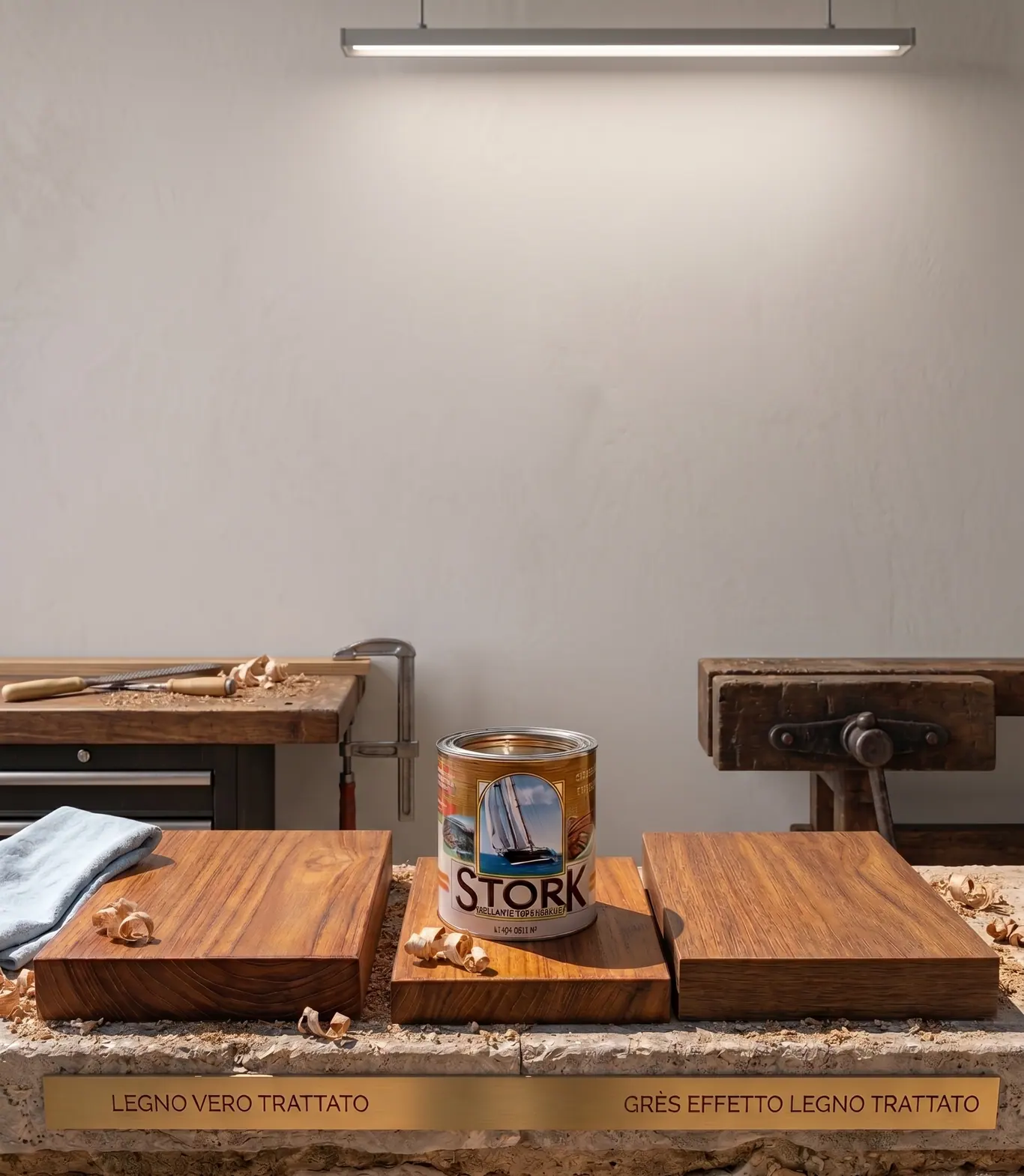
What stoneware cannot replicate is the sensory experience of real wood: its texture to the touch, the natural variation of the grain from board to board, the material's ability to live and slightly change its appearance over time, the feeling of warmth perceived even visually. Even the most realistic wood-effect stoneware, seen up close or touched, remains recognisable as ceramic.
There is also a less discussed but concrete aspect: stoneware, being a rigid, non-breathable material, also behaves differently from wood thermally — it can feel hotter in direct sun and colder underfoot than wood, a detail that people who use outdoor spaces notice in practice.
The real issue: perceived maintenance vs actual maintenance
Much of the choice in favour of stoneware stems from the perception that wood requires too much work. This perception is partly true, but often exaggerated: most outdoor wood maintenance today comes down to a wood stain applied once or twice a year, with products that are touch-dry in an hour and require no full sanding in most cases.
When each of the two makes sense
Stoneware makes sense on very large floor surfaces, with zero maintenance budget, or in extreme climatic conditions. Real wood makes sense when the goal is an authentic sensory experience — furniture, cladding, elements in direct contact — and with modern maintenance cycles the gap in effort required is much smaller than people think. The two solutions can also coexist in the same project.
In summary
Wood-effect stoneware wins on zero maintenance and mechanical strength; real wood wins on sensory experience and authenticity and — with the right products — requires much simpler maintenance than people believe. The choice depends on what really matters for your project.
Related articles
 exterior woodExterior wood paint without sanding: a guide to quick renewal cyclesApplication Tips4 minHow to restore colour and protection to outdoor furniture, railings and window frames without hours of sandingREAD
 exterior woodHigh Protection impregnating stain: when and how to use it on exterior woodWood Products4 minEverything you need to know about the most requested product in the Covema Linea LegnoREAD
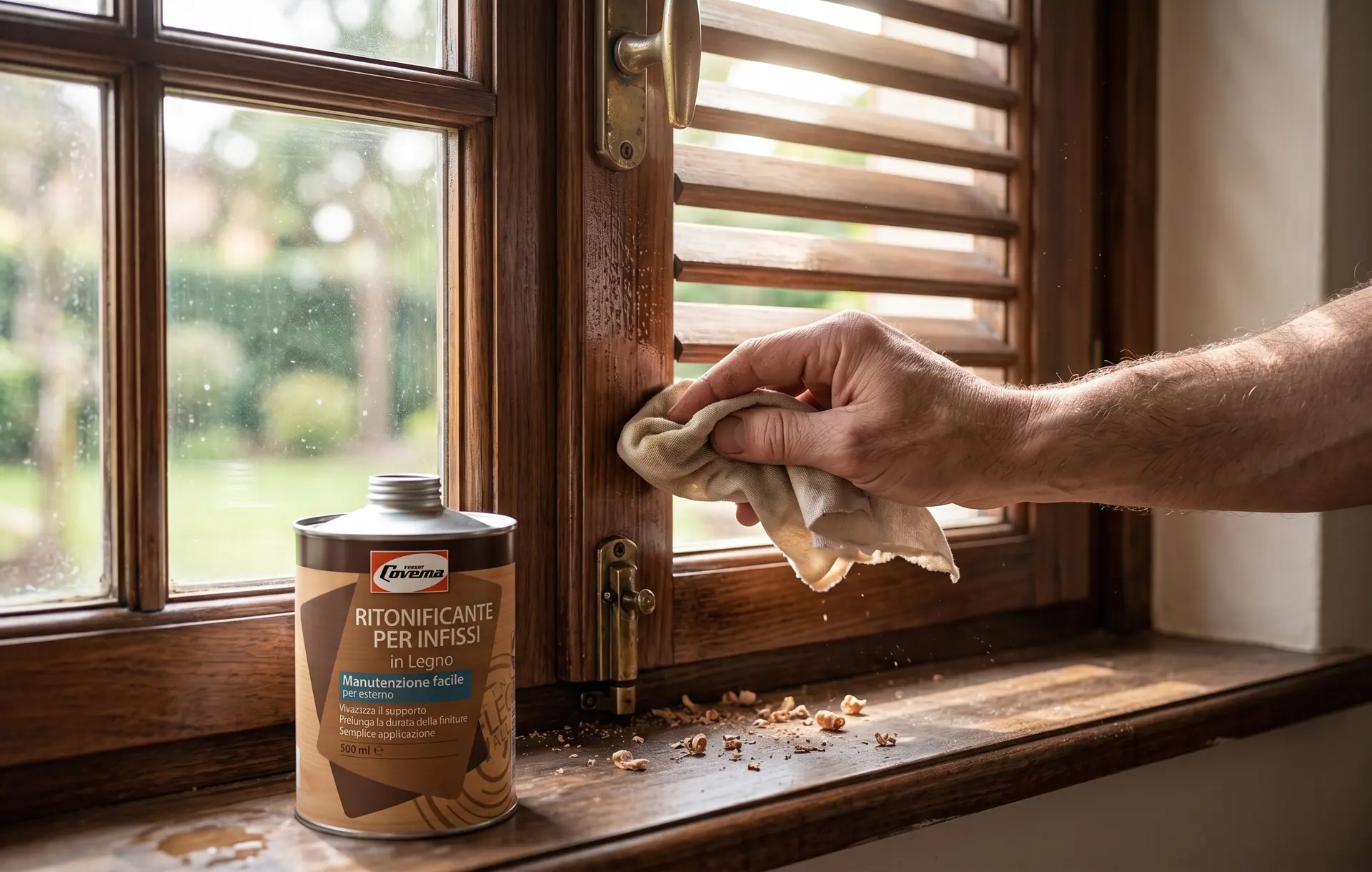 exterior woodAnnual maintenance of wooden window and door frames: the step that extends the life of doors and windowsApplication Tips3 minA small recurring task that prevents much bigger and more costly workREAD
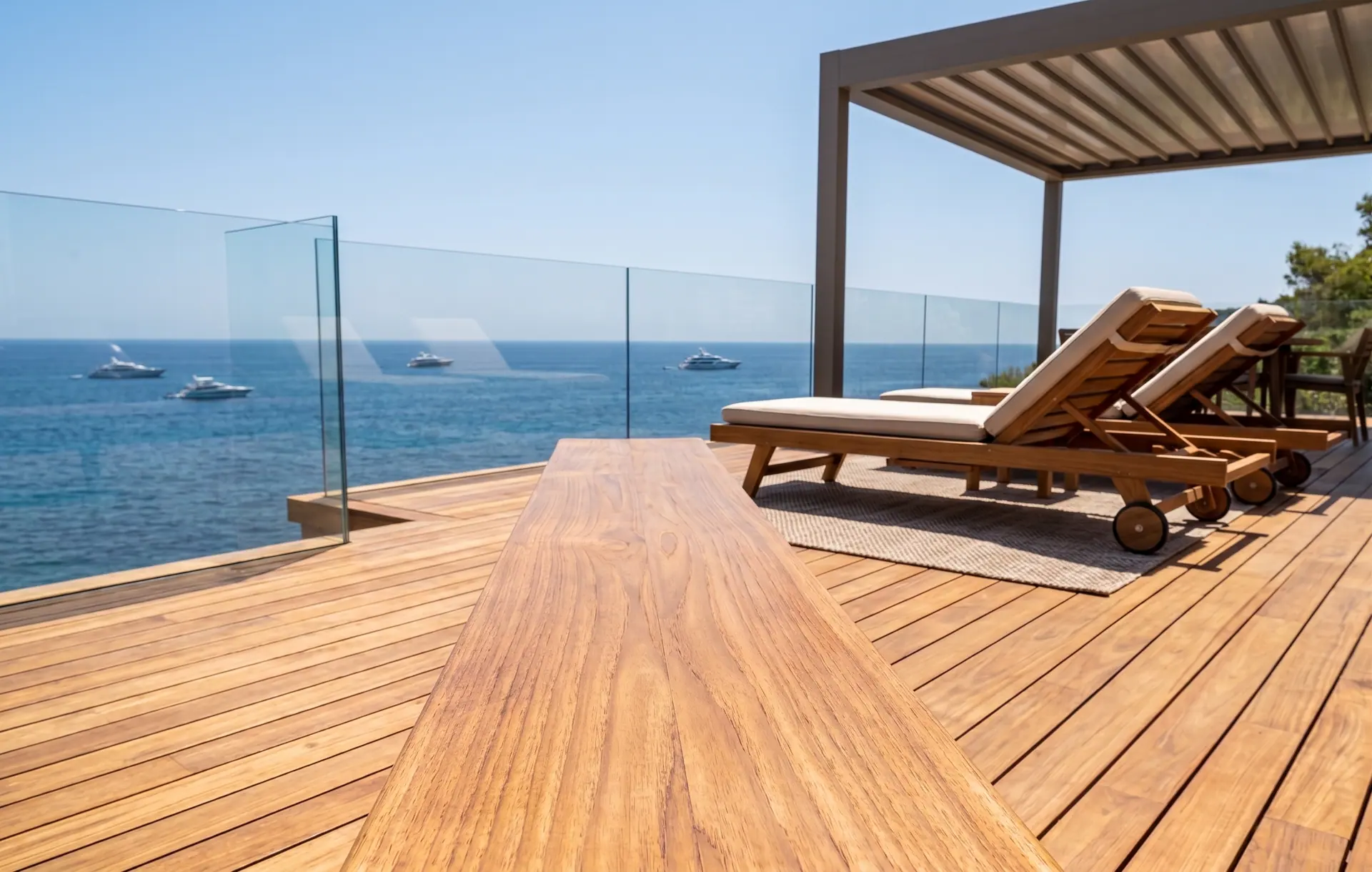 exterior woodWood by the sea: protecting terraces, furniture and boats from salt airIdeas with Wood – Outdoors4 minThe marine climate is among the most aggressive for wood: here is how to tackle it with the right productREAD